

Overview
Running a search is a great way to narrow down the contact records you’re working with – instead of wading through every record in the project, with search results you’ll see just the contacts you’re interested in. However, even after running a search, you may still have a large number of contacts included in the results. This article will help you learn to navigate those records.The search results page
We’ll begin by getting to know the search page. There’s a lot of information displayed here. There are also helpful tools for navigating – you just need to know where to look. Below we look at four areas of the search results page.1. Contacts
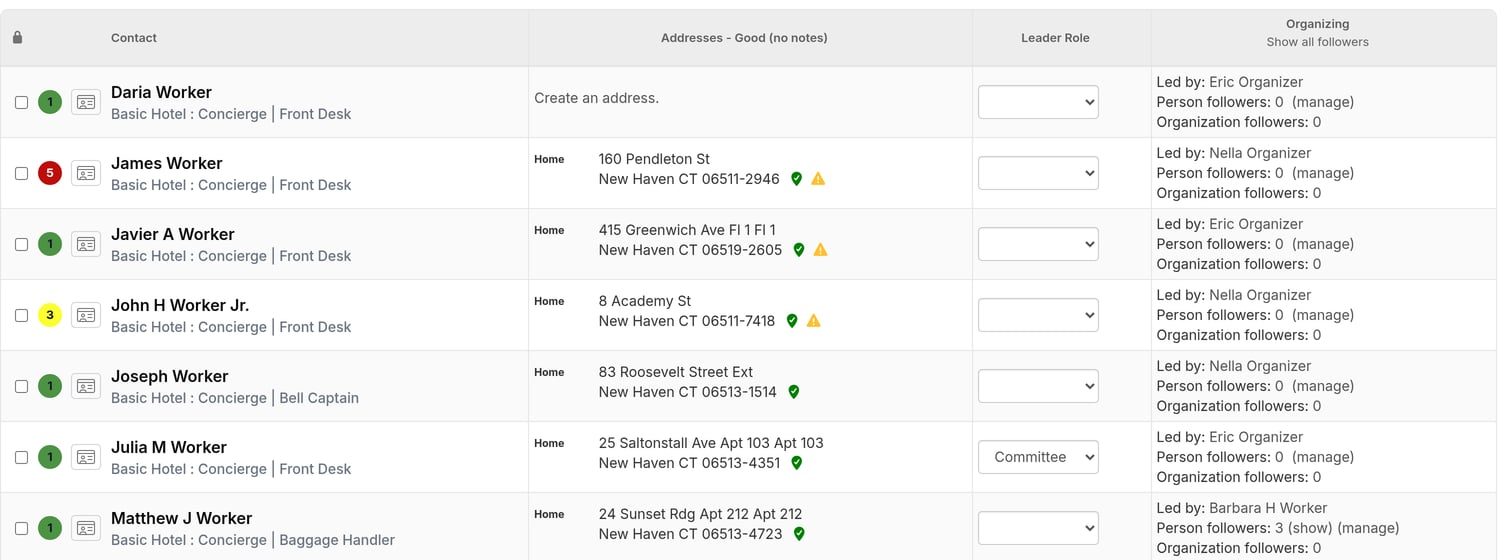
This section of the search results shows each of the contacts that match the search criteria.
2. Result count, page range, and scope
The search results header shows three pieces of information side by side:- Total count - a large, prominent number with an entity label that reflects what is in your results. If all matched records are people it shows “people” (for example, “121 people”); if all are organizations it shows “orgs” (for example, “37 orgs”); for any mix of record types it shows “contacts”.
- Page range - a smaller “Records X-Y” indicator that updates as you page or scroll through results.
- Scope chips - pills that name the active type filter (for example, “People” or “Orgs”) and any employer filter. Each chip wears its own color: Everything shows in green, People shows in sky blue, and narrower scopes (Orgs, a custom record type, or an employer filter) show in amber. The People, Orgs, and custom-type chips each have an button to clear that filter immediately; the Everything chip is informational and has no X because there is nothing to clear.

3. Contact records shown per page
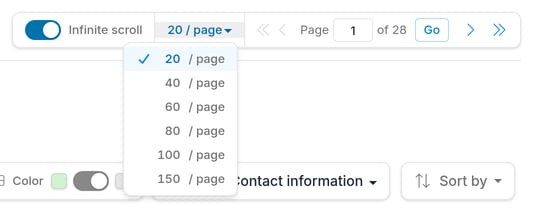
The per-page dropdown shows the current page size as 'N / page' (for example, '20 / page'). Click it to choose from 20, 40, 60, 80, 100, or 150 records per page.
4. Page navigation

The page navigation controls include a page input and Go button for jumping to a specific page, plus chevron arrows for stepping forward or backward one page at a time or jumping to the first or last page.
5. Infinite scroll toggle
The Infinite scroll () toggle switch is in the search controls bar at the top right of the results. When on (the default), Broadstripes automatically loads more records as you reach the bottom of the visible results. Toggle it off to keep results on individual pages and navigate with the page controls instead. Your preference is saved automatically and applies to all future searches.
Scrolling through results
You can scroll down through your search results in a few ways:
- use your keyboard’s down arrow or page down key.
- use your mouse to scroll down, just as you would with any other web page. As you scroll down, Broadstripes dynamically loads additional records as you reach the end of your search results. The page range beside the result count updates as more records load (for instance “Records 1-20” will change to “Records 1-40”) so you can always see which records are currently displayed. To turn off infinite scrolling and navigate page by page instead, use the Infinite scroll toggle in the search controls bar. You can keep the header information visible even as you scroll down the search results by clicking the lock header button () in the checkbox column at the top left of the results table. This will “lock” the column headers and toolbar in place at the top of the page.
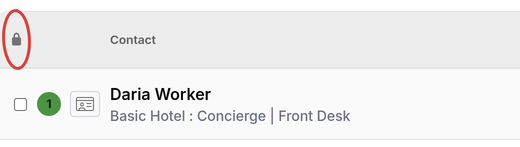
Click the lock header button.
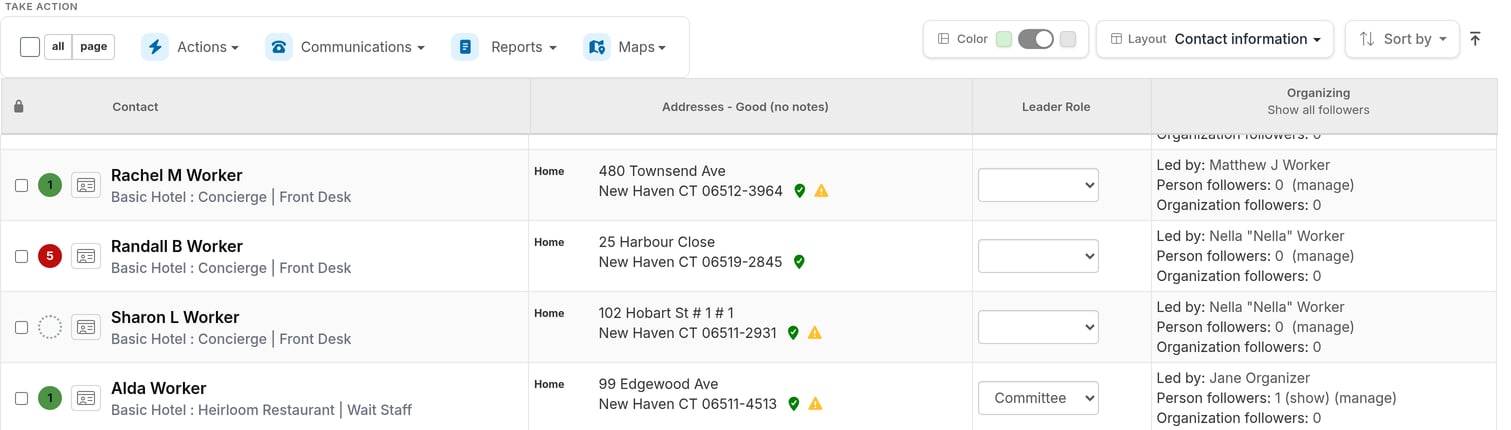
With the header locked, the toolbar and column headers stay at the top of the page no matter where you scroll in the results.
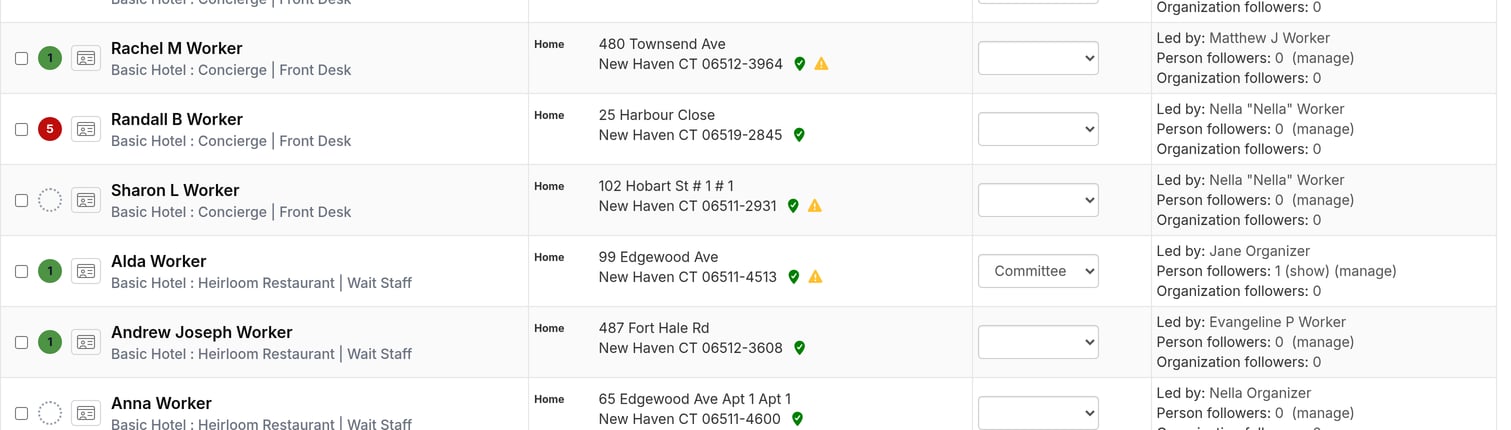
With the header unlocked, the toolbar vanishes as you scroll down through search results.
Choose table row colors
The Color () toggle in the search results toolbar lets you switch between two stripe palettes for the results table:- Classic stripes - the traditional green alternating row color.
- Neutral stripes - a subtle grey alternating row color (the default for new users).
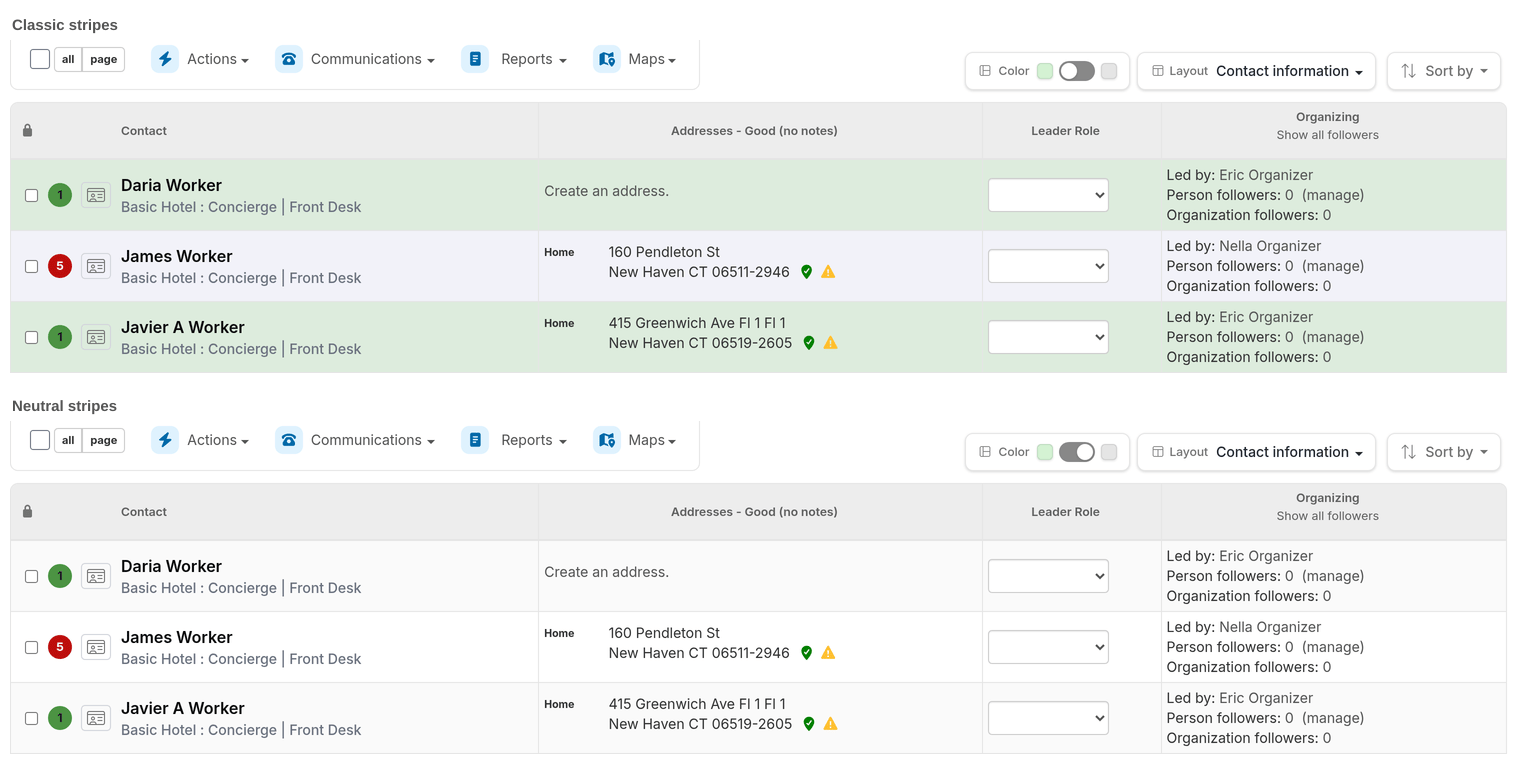
The Color toggle switches the results table between Classic (green) and Neutral (grey) stripes.
Paging through results
If you want to move more quickly through your search results, you can view them a page at a time. First, set the number of results you want to see per page using the 20 / page drop-down menu in the search controls bar at the top of the page. Next, use the page navigation tool in the search controls bar to move from page to page.